
Advancing South India’s Global Agenda

Infrastructure as Influence: Emerging Economic Blocs and the Competition for Arctic Resource : Sairakshit Raghupathy
BackInfrastructure as Influence: Emerging Economic Blocs and the Competition for Arctic Resource : Sairakshit Raghupathy
INFRASTRUCTURE AS INFLUENCE: EMERGING ECONOMIC BLOCS AND THE COMPETITION FOR ARCTIC RESOURCE
Author: Sairakshit Raghupathy
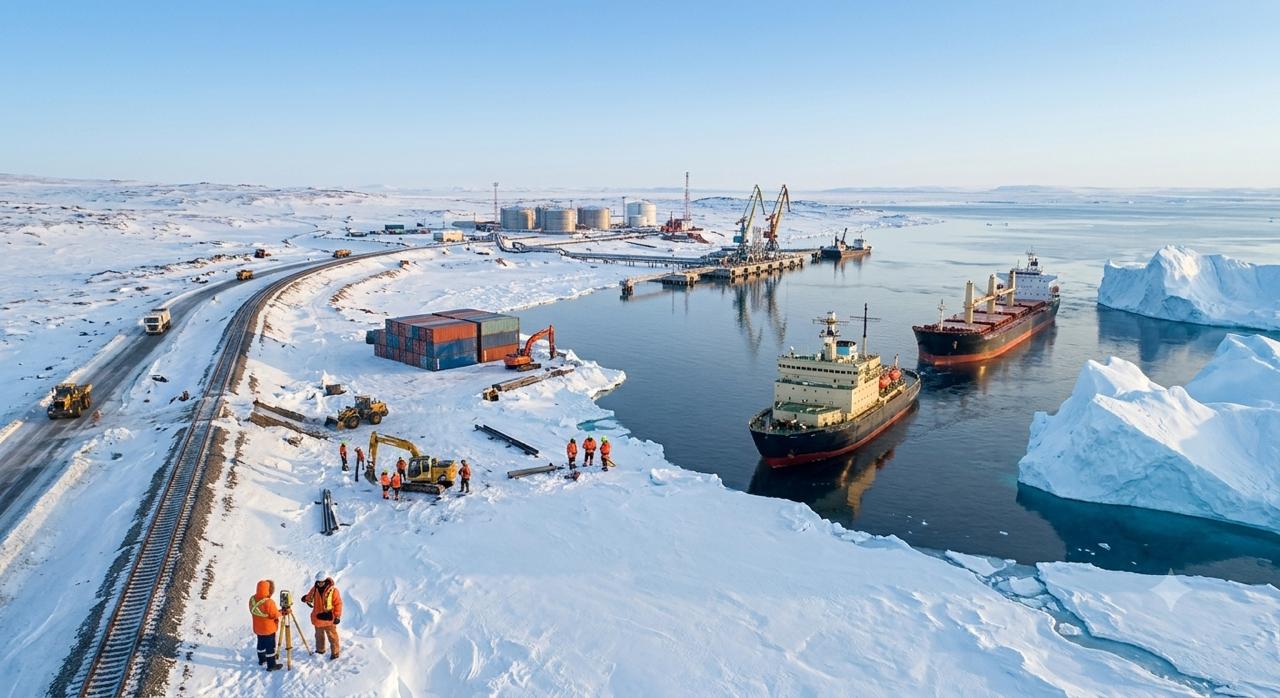
The Arctic region is emerging as an important arena for competition over energy resources, critical minerals and maritime access. The Arctic has a long history of industrial activities involving the extraction of oil and natural gas. Commercial exploitation of the North began in the 1920s, with Norman Wells in Canada's Northwest Territories, northern Russia, and Alaska. The U.S. Geological Survey estimates that areas north of the Arctic Circle could contain 90 billion barrels of undiscovered oil, 1,669 trillion cubic feet of natural gas and 44 billion barrels of natural gas liquids, with roughly 84% of these estimated resources located offshore.
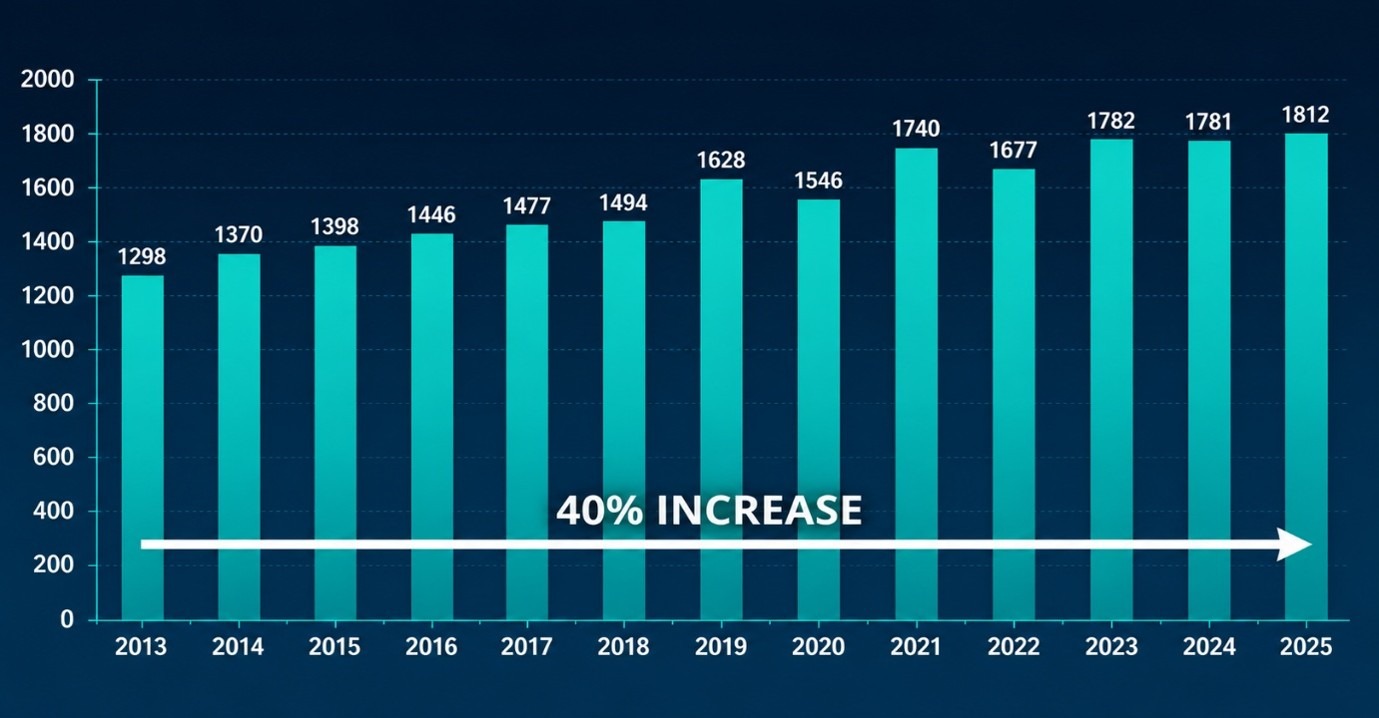
Fig 1. Unique Ships – Arctic Polar Code Area (2013-2025)
Commercial activity has also been expanding in recent years, as the number of unique ships entering the Arctic Polar Code area has increased by 40% between 2013 and 2025, reaching 1,812 vessels in 2025.The increase in the commercial activity is due to Arctic Amplification, a phenomenon in which the melting of sea ice in the shelf region is caused and has opened new routes forpolar commercial activity. For example, the reduction in sea ice has extended the navigation season and expanded the areasaccessible to cruise ships. The number of yachts travelling in the Arctic Polar Code Area has increased from 7 in 2013 to 21 in 2025.
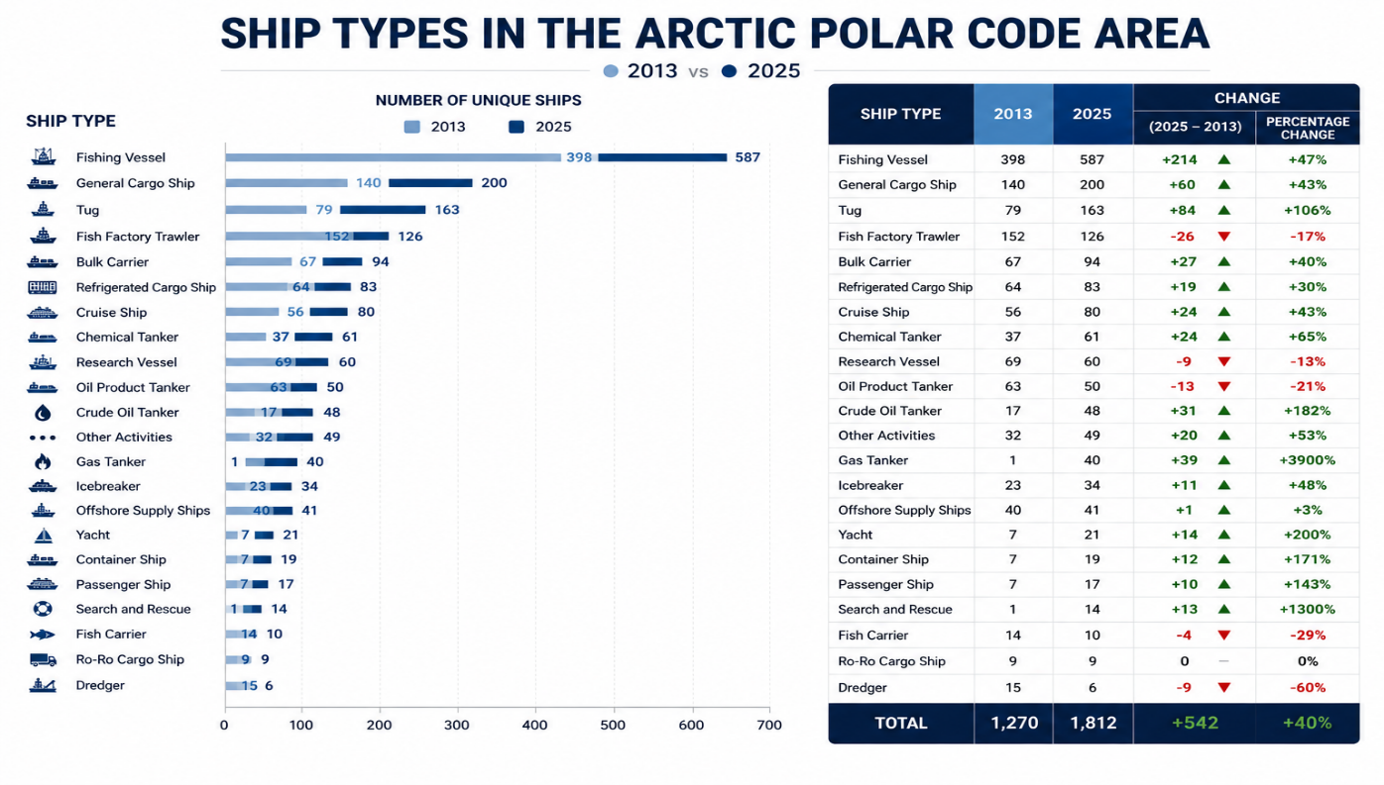
Fig 1.1. Ship Types in the Arctic Polar Code Area (2013 & 2025)
There are two reasons for the increase in the number of yachts travelling in the Arctic: First, there has been an increase in the number of expedition or explorer-style yachts built for scientific exploration, while others have been converted from commercial vessels into privately owned yachts. Second, the emergence of Last Chance of Tourism, where travellers seek out destinations threatened by environmental degradation and climate change, is driven by the desire to experience these places before they change significantly or disappear. However, while declining sea ice is making parts of the Arctic increasingly accessible for commercial activity, accessibility alone is not sufficient to transform the region’s economic opportunities into strategic influence.
Possessing resources does not automatically translate into economic or geopolitical influence. Arctic resources are often located in remote, difficult to access areas, which makes extraction challenging. Turning these resources into commercially viable assets requires investment, specialized technology, ports, ice-class vessels, energy infrastructure, logistics networks and access to international markets. States project strategic power in the Arctic by leveraging businesses to fund, build, and operate vital infrastructure, including transport networks. Ultimately, Arctic dominance will belong not just to those who own the resources but to those who control the networks required to bring them to market.
Infrastructure and Resource Access
Owning Arctic resources and being able to exploit them are two different forms of power. A state may have legal control over oil, gas or mineral deposits within its territory, but commercial value emerges only when companies can finance exploration, extraction and connect production sites to transportation and international markets. The high cost of this process makes infrastructure particularly important in the Arctic. An Arctic Economic Council report on business finance notes that Arctic financing has been heavily directed toward infrastructure such as roads, railways, ports, and power systems. The Nordic Investment Bank alone had allocated more than 500 million Euros through its Arctic Financing Facility.
Individual projects show how closely resource access depends on logistics. Agnico Eagle’s planned revival of the Hope Bay gold mine in Arctic Canada involves a $2.4 billion investment and relies on seasonal barge transportation through the Northwest Passage to reduce operating costs. There are three layers of control over resources: Territorial – who legally owns them; Commercial – who finances, extracts and transports them; Supply Chain – who processes, buys and moves them to market. A country doesn’t need Arctic territory to gain influence there: if its companies operate across several of these layers, they become hard to replace. That gives them real power over how Arctic resources developed and sold.
Business as Geopolitical Power
Infrastructure provides access to Arctic resources, but the companies that finance, build and operate these projects can turn that access into long-term economic influence. Governments can expand their Arctic presence through state-owned enterprises, energy companies, shipping firms, shipbuilders, and logistics operators, creating commercial footholds without acquiring territory. Russia’s Yamal LNG project illustrates this model. Novatek retained 50.1% of the project, while France’s TotalEnergies held 20%, China’s CNPC 20% and the Silk Road Fund 9.9%. In 2016, the Silk Road Fund paid about Euro 1.09 billion for its stake and provided a 15-year loan to support the project. The project contributed to the development of Sabetta International Airport. One such project is Arctic LNG 2, Novatek’s second large-scale LNG project. The Utrenneye field, the resource base for the project, is located in the Gydan Peninsula in Yamalo -Nenets Autonomous Okrug (YNAO) approximately 70 km across the Ob Bay from the Yamal LNG project.
This model is now extending into Arctic logistics. In March 2026, Russia’s state-owned Rosatom and UAE-based DP World agreed to establish a logistics joint venture, with Rosatom holding 51% and DP World 49%. The partnership is in line with Rosatom strategy to develop a global logistics operator and increase cargo flows, including through the Northern Sea Route, the Arctic transport corridor along Russia's northern coast. Such agreements show how investment, infrastructure, and long-term contracts can embed foreign companies within Arctic economic activity. Commercial investment creates presence; infrastructure makes that presence harder to replace; and dependence on financing, technology, logistics, or markets can eventually translate into Geopolitical Influence.
Russia and Northern Sea Route (NSR)
Russia is increasingly using Northern Sea Route as a platform to connect its Arctic resources with non-Western capital, shipping and markets. Cargo traffic along the route reached about 37 million metric tons in 2025, while transit cargo rose to around 3.2 million tons, showing that the NSR is developing beyond a domestic resource corridor. Rosatom, the state corporation responsible for NSR infrastructure and nuclear icebreaker services, links this commercial expansion directly with Russia’s national Arctic strategy. Moscow is also trying to widen the route’s international base. In August 2026, Russian officials said BRICS countries had been invited to participate in NSR development as investors, partners, and operators including in ports, warehouses, shipbuilding, marine equipment, and fleet operations.
China is already the most developed partner in this model. Russia has begun shipping crude oil via its NSR this year at a faster pace than a year ago, with seven cargoes carrying some 6 million barrels of crude already heading to Asia. Together, these partnerships suggest that Russia is seeking to turn the NSR into a wider Eurasian commercial network in which foreign businesses help finance, operate, and sustain access to Russian Arctic resources.
North American – Nordic Partnerships
The North American and Nordic states are building a different model of Arctic influence, one based on pooling industrial capacity, maritime technology, and resource infrastructure across allied economies. The clearest example is the Icebreaker Collaboration Effort or ICE Pact, established by the United States, Canada, and Finland to strengthen their ability to design, produce, and maintain Arctic and polar icebreakers, as well as other capabilities, by collectively increasing information exchange, industrial collaboration, and operational know-how. Finland brings a particularly valuable capability: Finnish companies have designed about 80% of the world’s icebreakers, while roughly 60% have been built in Finnish shipyards. That expertise is now being converted into shared industrial capacity. In 2026, construction begun in western Finland on the first U.S. Coast Guard Arctic Security Cutter, marking a key milestone in Washington’s effort to rapidly expand its icebreaker fleet and demonstrating the growing impact of U.S.-Canada-Finland industrial cooperation.
The same partnership logic is emerging around resources. Canada’s First and Last Mile Fund has conditionally approved up to $50 million for planning and pre-construction work on West Kitikmeot Resources Corporation’s Grays Bay Road and Port project. Following its referral to the Major Projects Office by Prime Minister Carney in March, the funding will advance a deepwater Arctic port at Grays Bay and a 230 kilometre, all season road to unlock regional zinc and copper developments. Canada and Norway also signed a critical minerals cooperation agreement in March 2026 covering innovation and secure supply chains. Norway adds substantial offshore and maritime capability. Its oceans generated about NOK 2,306 billion in value added in 2022 and employed 233,600 people. Rather than organizing around a single corridor like Russia’s NSR strategy, this emerging network links shipbuilding ports, critical minerals, and maritime technology across several allied economies.
India’s Arctic opportunities
India can build an Arctic economic presence without territory by connecting its companies, ports and industrial capabilities to multiple Arctic commercial networks. Russia offers the most direct opening through energy and the Northern Sea Route (NSR). The former Indian Ambassador to Russia, Ajai Malhotra, has said that New Delhi is examining the Arctic region not merely as a domain for scientific research, but as an emerging maritime trade corridor and strategic opportunity in the global commons. This ambition is now acquiring a domestic infrastructure dimension. In June 2026, Andhra Pradesh Minister Nara Lokesh pitched the state as India’s gateway to Arctic logistics at the St. Petersburg International Economic Forum, citing its roughly 1,000 kilometres coastline, six operational ports and new ports under development. The state’s 2024 Maritime Policy specifies a 1,053.7 kilometres coastline and identifies Vishakhapatnam and its expanding port network as key maritime assets.
India is simultaneously building alternatives through Nordic partnerships. At the 3rd India-Nordic Summit, held in Norway on 19th May 2026, leaders agreed to elevate ties to a Green Technology and Innovation Strategic Partnership and strengthen Nordic Indo-Pacific connectivity, aligned with the India-Middle East-Europe Economic Corridor. India and the Nordic countries are strengthening cooperation on renewable energy, green hydrogen, low emission technologies, carbon capture and critical minerals, alongside the India-Sweden led Leadership Group for Industry Transition (LeadIT). Cooperation also extends to maritime safety, green shipping, shipbuilding, pollution prevention and sustainable ocean management, supported by initiatives such as the Indo-Pacific Oceans Initiative and Maritime Security Dialogues with countries including Norway and Denmark.
Emerging Arctic Blocs
The Arctic is beginning to show signs of commercial fragmentation as sanctions, technology restrictions and supply-chain security push countries and companies toward preferred economic partners. Western sanctions on Russia’s Arctic energy sector have already changed business behaviour. The Arctic LNG 2 project, for example, was designed with shareholders from Russia, France, China, and Japan, but U.S. sanctions disrupted financing, shipping, and technology access and forced foreign companies to reconsider their exposure. By June 2026, Russia had approved the sale of TotalEnergies 10% stake in the project, illustrating how geopolitical pressure can reshape the ownership structure of Arctic business itself.
At the same time, Western economies are increasingly treating mineral supply chains as a security issue. A 2024 study on geopolitical tensions in Arctic industries found that, European concerns in the mineral sector increasingly centred on dependence on external suppliers of critical raw materials. The EU has responded by designating strategic critical mineral projects under its Critical Raw Materials Act to strengthen domestic and partner-based supply chains.
Yet these networks will not be completely closed. South Korea is preparing an Arctic container trial through Russia’s Northern Sea Route while planning a stop at Norway’s Tromsø port, demonstrating how commercial interests can cross geopolitical boundaries. The emerging Arctic may therefore resemble overlapping commercial ecosystems rather than two fixed blocs, with geopolitical influence increasingly shaped by who controls ports, technology, shipping services, investment, and resource supply chains.
Conclusion
Future competition in the Arctic may therefore be determined not simply by who possesses its resources, but by who builds, finances, and operates the commercial networks required to access and bring them to market. As infrastructure investment and business partnerships deepen, they could create long-term economic relationships that shape how Arctic resources are developed and traded. Countries whose businesses become embedded in these networks will better be positioned to secure economic opportunities and shape the Arctic’s broader economic and geopolitical future.
Sairakshit Raghupathy is a Research Officer at the Deccan Centre for International Relations, specializing in geopolitics and energy security. His research interests span the Polar Regions, Central Asia, and North Africa, with a focus on the evolving geopolitical and strategic dynamics shaping these regions.
Disclaimer: The views and opinions expressed in the article are those of the author and do not necessarily reflect the official position of the Deccan Centre for International Relations.