
Advancing South India’s Global Agenda

Race for the Arctic: China’s Ice Silk Road: Balasubramanian C
BackRace for the Arctic: China’s Ice Silk Road: Balasubramanian C
Race for the Arctic: China’s Ice Silk Road
Author: Balasubramanian C
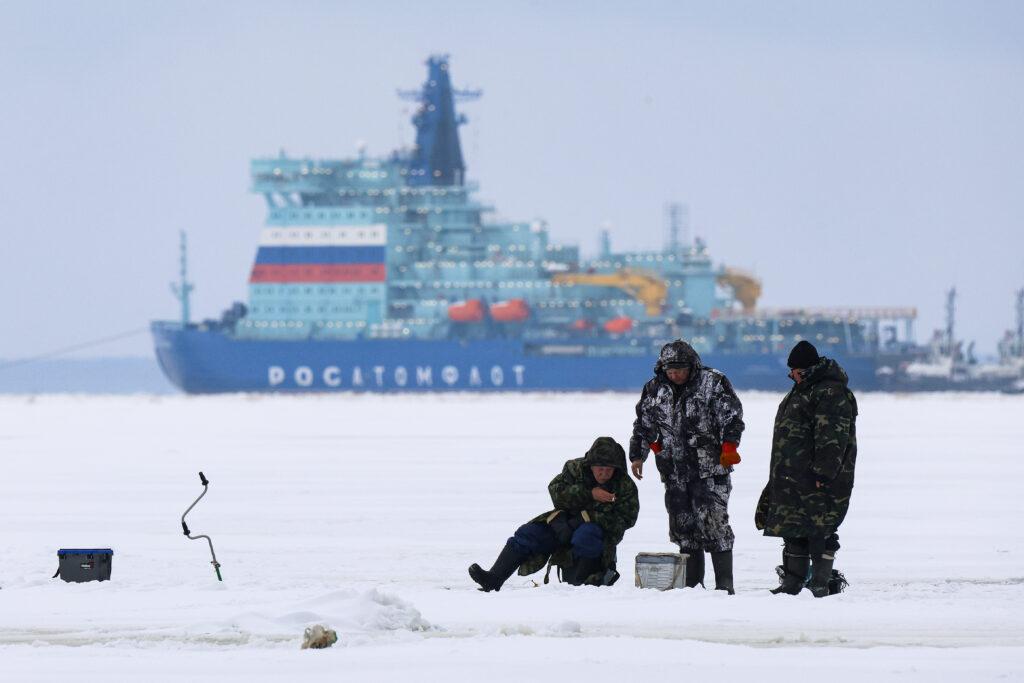
Chinese shipping company Sea Legend has launched the first regular container service through the Arctic, branding it the “Ice Silk Road.” Officially called the ‘China-Europe Arctic Express’, the weekly service links Ningbo on China’s east coast with Felixstowe in the United Kingdom via Russia’s Northern Sea Route (NSR).
The voyage is expected to cut the typical 40-day sailing time between the two ports roughly in half, depending on ice conditions. By skirting the north Russian coast, ships can also avoid traditional chokepoints such as the Bab al-Mandab Strait and the Red Sea, where Houthi attacks have repeatedly disrupted traffic.
Sea Legend’s scheduled service builds on a trial voyage completed in September 2025. It follows a sharp rise in Arctic container activity: 23 containership transits of the Northern Sea Route were recorded in 2025, up from 15 in 2024. Most earlier passages were one-off or demonstration voyages rather than regular liner operations.
The Northern Sea Route shortens the distance between East Asian manufacturing centres and northern European ports by an estimated 30-40 percent compared with the Suez Canal route. Russia’s state nuclear corporation Rosatom has issued permits for the 2026 season, which is scheduled to run until November. The route is divided into 28 sections with varying ice-related rules; vessels require permits and may receive assistance from Russian icebreakers.
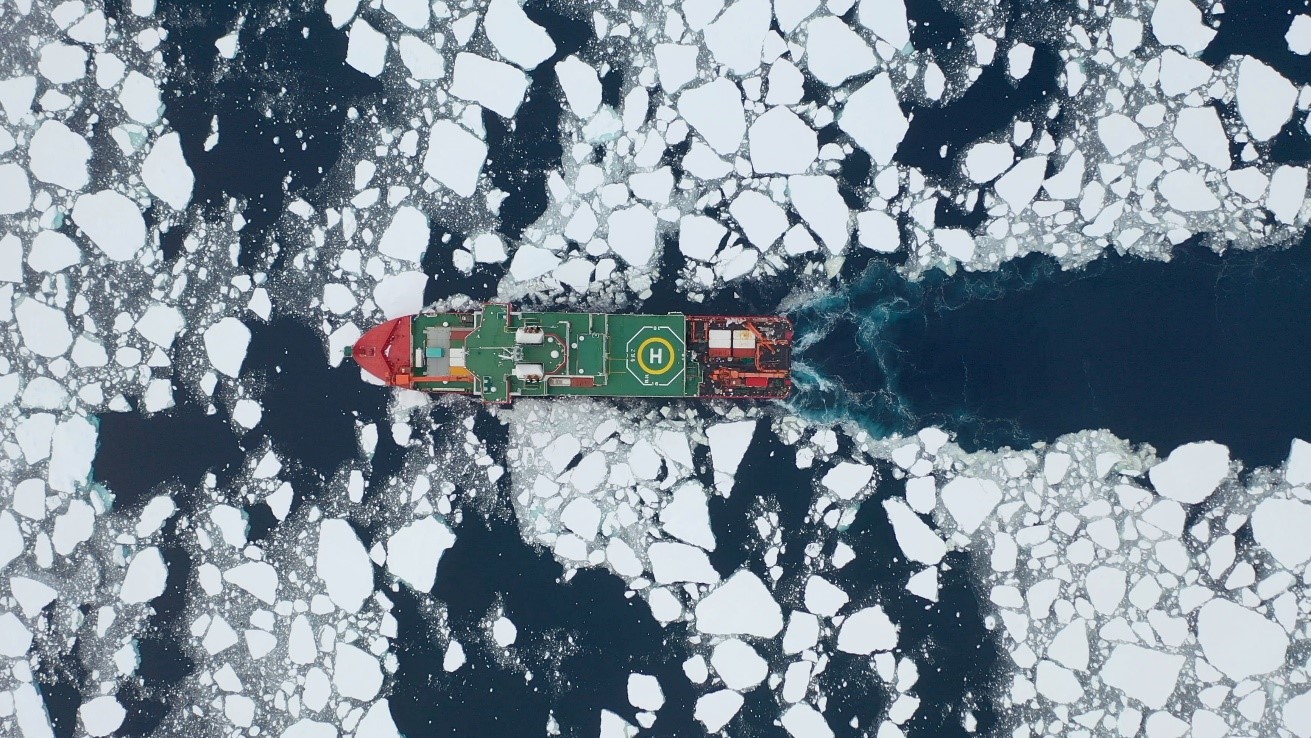
Image courtesy: Wikimedia Commons
Declining summer sea ice has extended the practical operating window in recent years, while infrastructure improvements along Russian Arctic ports have improved options for refuelling, tracking and emergency support. At least six Chinese operators are lining up container and bulk voyages this season, with capacity estimated at roughly 20,000 TEU.
Apart from Russia and China, South Korea is conducting its first demonstration container voyage through the NSR later this month, operated by PanStar with government support. Additionally, India is in discussions with Russia on NSR cooperation and has indicated plans for a first pilot vessel around 2027 as it expands the Eastern Maritime Corridor toward the Arctic.
Strategic Drivers
Interest in the Arctic corridor has grown as security risks persist on conventional Asia–Europe routes. Houthi militants renewed threats and claimed attacks on vessels in the Red Sea, including two Saudi tankers in late July along with parallel concerns that exist in the Strait of Hormuz. These disruptions have made alternative pathways more attractive even though the Arctic remains more challenging to navigate.
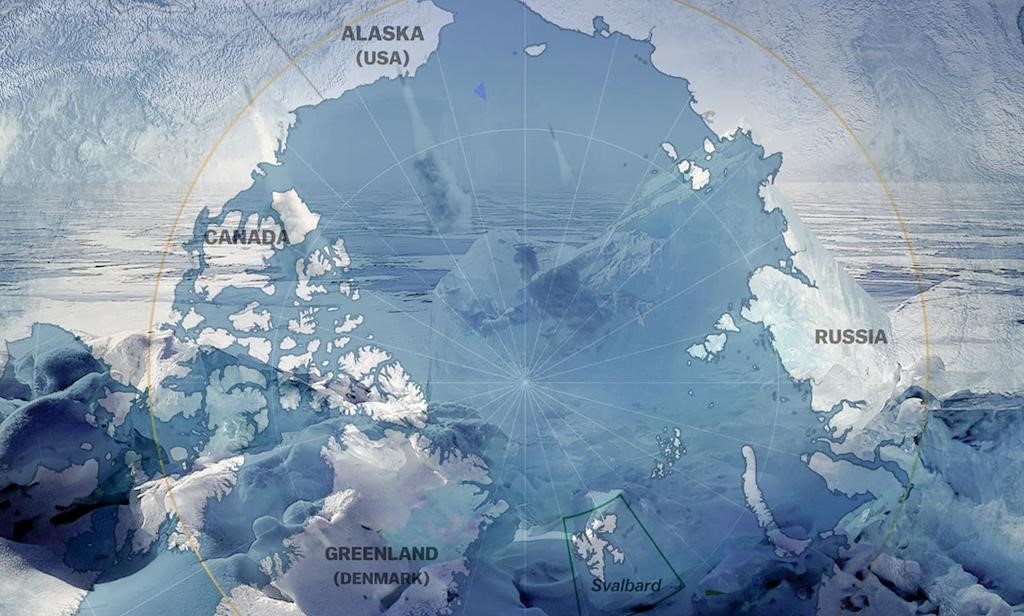
Image courtesy: Wikimedia Commons
The “Ice Silk Road” name deliberately echoes China’s broader ‘Polar Silk Road’ concept, first advanced around 2017 as part of the One Belt and One Road Initiative (OBOR). Beijing, which describes itself as a “near-Arctic state,” has long viewed polar shipping as a way to reduce dependence on vulnerable straits originally the Strait of Malacca, and more recently Middle Eastern chokepoints. For Beijing, cooperation with Russia provides access to icebreaking capacity that few other nations can match. Russia on its part has also courted India on NSR logistics, while Japan and other Asian states monitor the route for energy-security reasons.
Operational Challenges in the Arctic
Operating in the Arctic carries distinct hazards. Ships encounter ice fields, experience less reliable satellite navigation at high latitudes, and must comply with the International Maritime Organization’s Polar Code on safety and environmental standards. Search-and-rescue resources are sparse across much of the region, and salvage, firefighting or pollution-response capacity is limited. An Allianz analysis found more than 500 maritime incidents in the Arctic over the past decade, nearly half involving machinery damage or failure.
A serious accident involving fuel or hazardous cargo could prove difficult to contain. While the shorter distance can lower fuel consumption and CO₂ emissions per voyage when conditions allow safe passage, yet environmental concerns including black carbon emissions or soot and the risk of oil spills in a fragile ecosystem remain significant.
Western major liners such as Maersk, MSC, CMA CGM and Hapag-Lloyd have largely withdrawn, citing not only environmental and navigational risks but also sanctions exposure and insurance difficulties. Post-2022 Western sanctions have sharply narrowed the diversity of traffic. Russian and Chinese vessels now account for the overwhelming majority. Even Chinese operators face secondary-sanctions risks when dealing with Rosatom or sanctioned energy cargoes, leading some to create new corporate structures or limit deeper investments in ice-class equipment.
Geopolitics and Competing Ambitions in the Arctic
The rise in commercial traffic coincides with the intensifying strategic competition in the Arctic region. Russia regards its Arctic coastline as a critical economic and strategic asset and treats the NSR as a “historically developed national transportation artery” under full sovereign control. China, by contrast, consistently frames the route as an emerging international transport corridor that should not depend on any single state’s political discretion. This mismatch means Chinese commercial activity inflates Russia’s geopolitical leverage while leaving Beijing without guaranteed open access. The partnership is therefore more asymmetric and transactional than a seamless alliance as projected by Beijing and Kremlin.
Military and dual-use dimensions add further complexity. Joint China-Russia activities including bomber flights near Alaska and coast-guard operations in Arctic waters have raised Western concerns that regular commercial traffic could facilitate intelligence, surveillance, reconnaissance or military cargo movements. In February 2026 the NATO launched a military activity alliance. The alliance has launched monitoring activities under the banner of “Arctic Sentry,” reinforced its northern flank after the accession of Finland and Sweden, and is investing in polar-capable assets. Russia in turn has rebuilt Soviet-era bases, deployed advanced air-defence systems and strengthened its Northern Fleet. The Bering Strait, the eastern gateway to the NSR, is emerging as a particularly sensitive chokepoint between Alaska and Russia.
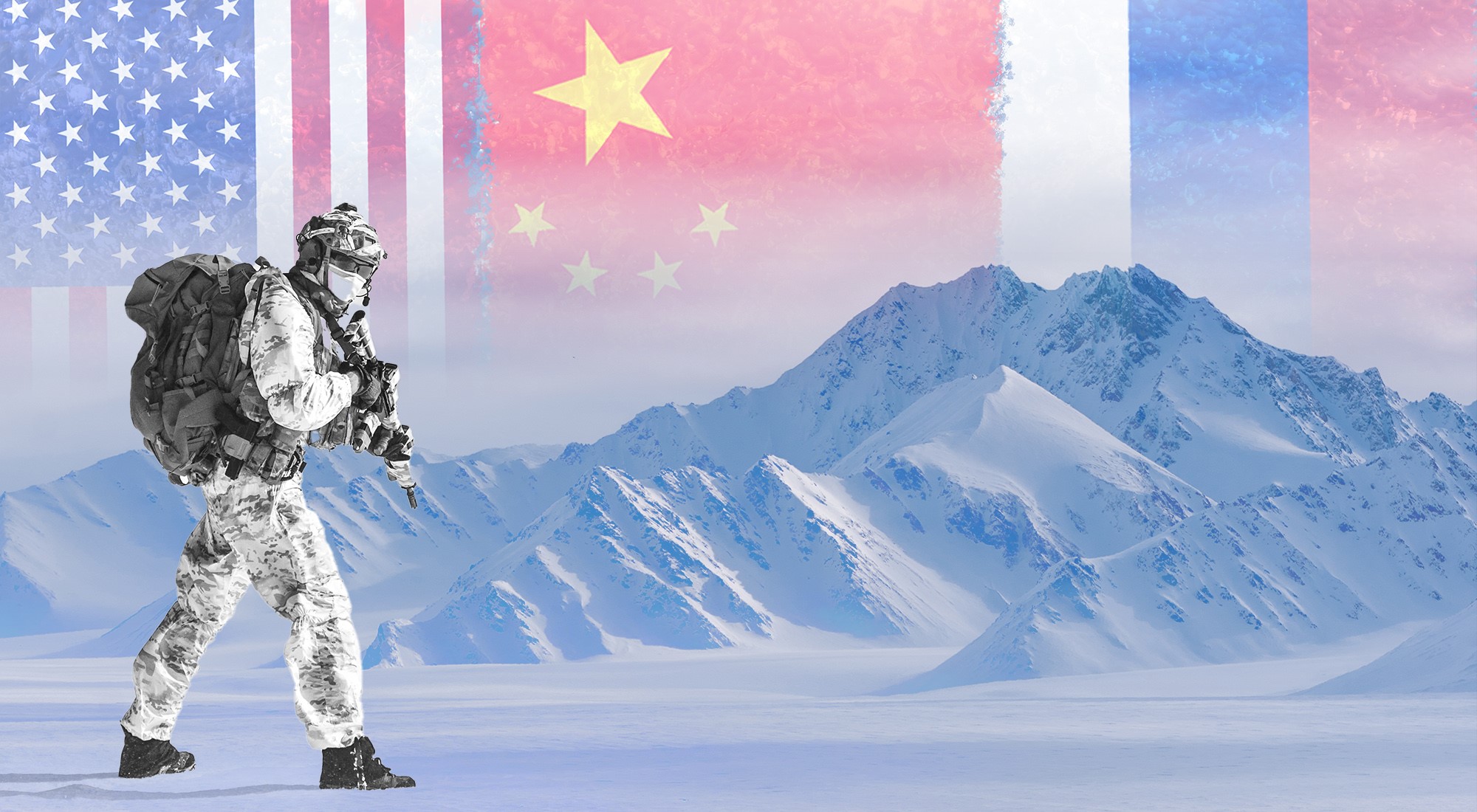
Image courtesy: Wikimedia Commons
The United States has moved to close its own capability gap. In October 2025, President Trump signed an agreement with Finnish President Alexander Stubb under which the US Coast Guard will acquire up to 11 advanced icebreakers (Arctic Security Cutters/ASC’s). Four are to be built in Finland and up to seven in the United States, leveraging Finnish expertise. The initiative aims to counter Russian and Chinese dominance in the Arctic and restore American maritime presence in the High North.
Canada, the second-largest Arctic territorial state after Russia, is asserting stronger control over the Northwest Passage, which it claims as internal waters. In March 2026, Prime Minister Mark Carney announced a multi-billion-dollar plan with over $35–40 billion to defend, build and transform Canada’s North, including military infrastructure upgrades, new operational hubs, radars, submarines and icebreakers. Ottawa is deepening defence ties with Nordic countries, monitoring Chinese research vessels, and treating Arctic sovereignty as a core national priority amid concerns about Russia, China and shifting U.S. dynamics.
Japan, an Arctic Council observer, is revising its 2015 Arctic Policy to place greater emphasis on research, international cooperation, shipping routes and resources. It is commissioning its first icebreaking research vessel, Mirai II, for climate, resource and sea-route studies and aims to position it as an international research platform. Tokyo remains cautious about deep commercial reliance on the Russian-controlled NSR, preferring cooperation with the United States and like-minded partners within a rules-based framework.
South Korea is advancing from observation to practical testing with its government-backed demonstration container voyage on the NSR. India is expanding interest beyond scientific research, engaging Russia on NSR logistics and preparing for a possible pilot voyage around 2027 as part of broader connectivity plans. Nordic countries (Norway, Sweden, Finland, Denmark/Greenland and Iceland) and the European Union are strengthening defence postures, surveillance and critical-mineral strategies while supporting rules-based Arctic governance and remaining wary of both Russian control of the NSR and Chinese dual-use activities.
The Arctic Council, the primary regional forum that includes Indigenous permanent participants, has been largely frozen since Russia’s 2022 invasion of Ukraine. Western members suspended cooperation with Moscow; China largely aligned with the view that the Council minus Russia is incomplete. This governance vacuum leaves fewer multilateral mechanisms to manage shipping standards, environmental rules or search-and-rescue coordination.
A parallel contest is unfolding over Canada’s Northwest Passage (NWP). Ottawa claims these waters as ‘internal’ under historic title, while the United States insists, they form an international strait subject to transit passage rights under the UN Convention on the Law of the Sea (UNCLOS). As ice melts, some analysts in Washington and Ottawa have floated the idea of developing a competing allied container route through the Northwest Passage precisely to counter Sino-Russian dominance of the NSR.
Beyond shipping, the Arctic holds significant hydrocarbons including Yamal LNG and Arctic LNG-2 projects in which Chinese firms have invested, rare earth minerals and fisheries. China’s share of global shipbuilding has risen from about 5 percent in 2000 to roughly 55 percent today, strengthening its ability to field polar-capable vessels. The United States is pursuing legislation to rebuild domestic shipyards, expanding cooperation with Finland on icebreakers, and has heightened attention to Greenland and broader Arctic access amid concerns over Chinese and Russian influence.
Russia’s mandatory permit and pilotage regime sits uneasily with traditional freedom-of-navigation principles upheld by the United States and others. China’s public emphasis on the NSR as an international corridor creates a latent legal tension with Moscow’s regulatory approach that could surface if traffic volumes grow or political relations shift.
Looking Ahead
The Ice Silk Road is not merely a shipping route. It represents a synthesis of a changing world order, commerce and climate change converging in the Arctic. The race for the polar regions signals a contest for the future and a form of insurance against troubled times ahead.
Sea Legend’s regular China–Europe Arctic Express will provide a practical test of whether the Northern Sea Route can evolve from a seasonal, specialised corridor into a commercially significant artery. Success will depend on ice conditions, reliable icebreaker support, manageable insurance and operational costs including the continued relative risk of southern routes apart from the ability of operators to navigate sanctions exposure.
For now, the service offers shippers a tangible alternative at a time when traditional pathways remain under pressure. At the same time, it underscores the tightly intertwined commercial, legal, military and sanctions considerations that make the High North one of the most contested maritime domains of the coming decade.
*****
Mr. Balasubramanian C. is a foreign policy and security analyst based in Bengaluru.
Disclaimer: The views and opinions expressed in the article are those of the author and do not necessarily reflect the official position of the Deccan Centre for International Relations.