
Advancing South India’s Global Agenda

China’s Global Data Governance in the AI Era: Balasubramanian Chandrashekar
BackChina’s Global Data Governance in the AI Era: Balasubramanian Chandrashekar
China’s Global Data Governance in the AI Era
Author: Balasubramanian Chandrashekar
Recently, China established the World Data Organization (WDO) in Beijing as a non-governmental, non-profit international organization dedicated to advancing global data development and governance.
China positions the WDO as the world’s first professional body focused specifically on data issues that brings together participants from over 40 countries, including companies, universities, think tanks, financial institutions, and experts from sectors such as manufacturing, healthcare, and technology. Its stated mission is to bridge the global data divide, unlock the value of data, and power the digital economy.
Unlike treaty-based institutions such as the WTO, the WDO emphasizes soft governance through policy coordination, standards recommendations, and the promotion of best practices. It aims to function as a “trust anchor” for cross-border data flows and aligns with broader Chinese initiatives, including the Global Initiative on Data Security, to strengthen global data governance.
The launch of the WDO comes at a time of rapid AI advancement, which has intensified the global need for dedicated platforms to address emerging data challenges.
Data as ‘New Factor of Production’
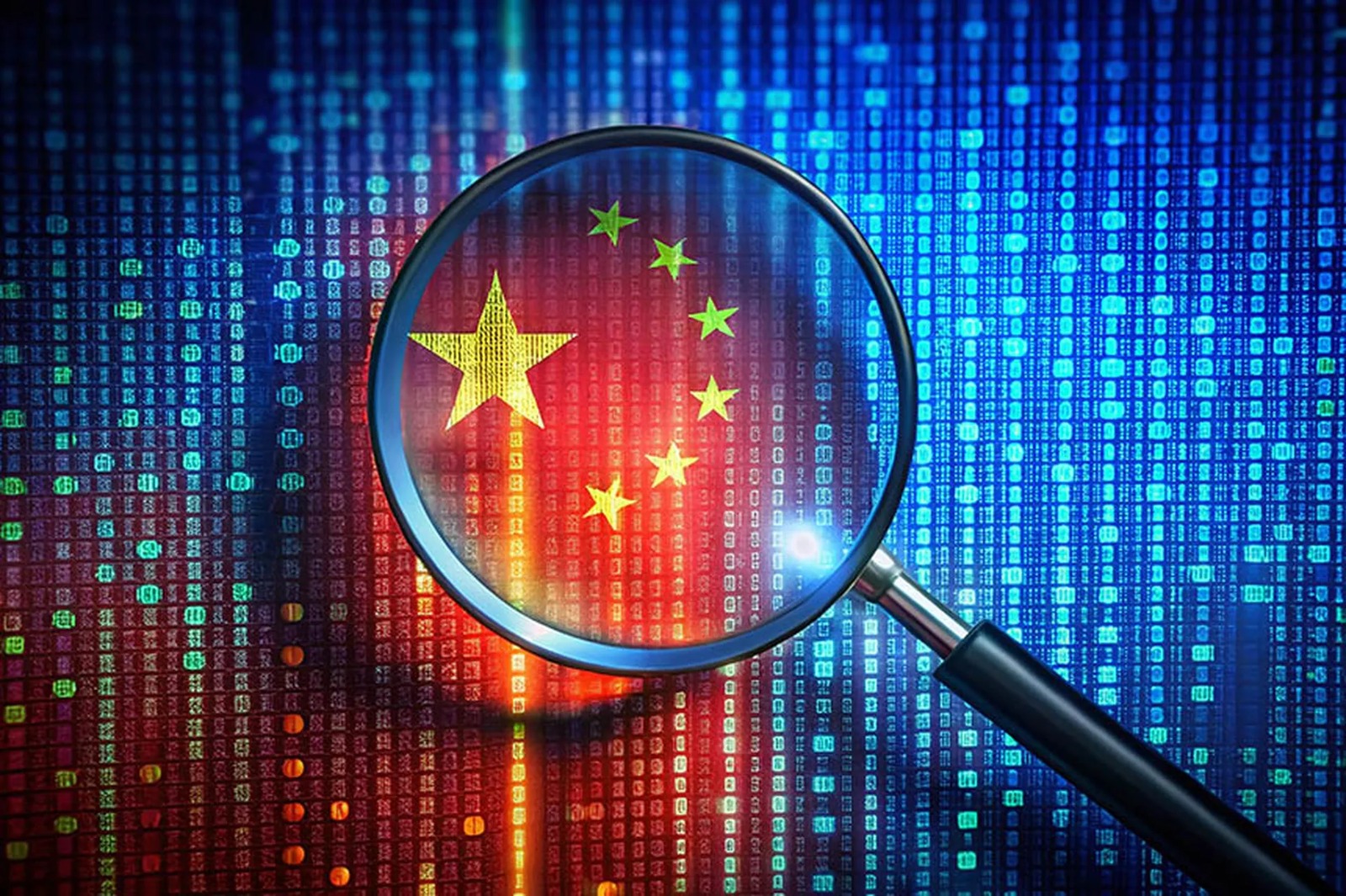
Data has become a cornerstone of China’s national strategy, often described as a ‘new factor of production’ alongside land, labour, capital, entrepreneurship, and technology. Chinese leaders view it as essential for economic competitiveness, technological self-reliance, and long-term strategic power in the AI-driven era.
China aims to significantly expand its digital economy and increase its share of GDP. Data serves as the critical fuel for AI, big data analytics, cloud computing, and smart manufacturing. To unlock its ‘multiplier effect’ across industries, the government has introduced mechanisms such as ‘data assetization’ (treating data as balance-sheet assets) along with state-owned data exchanges and public data franchising. These efforts seek to create a unified national data market.
Massive datasets are critical for training advanced AI models. China’s vast population, extensive digital infrastructure (including millions of 5G base stations), high computing power, and intense online activity generate enormous volumes of data. Policies like the “Data Element X” plan and the establishment of the National Data Administration in 2023 focus on ensuring a high-quality supply of data, its smooth circulation, and seamless integration with AI. These measures aim to drive innovation, industrial upgrading, and productivity gains — particularly important for offsetting domestic challenges such as a rapidly aging workforce and shrinking population resulting from decades of strict birth control policies.
Data-factor marketization (DFM) serves as a critical driver for cultivating new-quality productive forces in manufacturing enterprises. It fundamentally supports China’s transition toward high-quality economic development. The goal of cultivating new-quality productive forces (NQPF) to underpin high-quality development has been explicitly articulated by Xi Jinping at several high level forums. The Action Plan for Digital Transformation of the Manufacturing Industry, released by the State Council in 2025, further emphasizes accelerating the digital and intelligent transformation of manufacturing to achieve robust growth.
At the national security level, data is treated as a strategic resource. China emphasizes ‘data security’ in parallel with development, enforcing strict rules on cross-border data flows, localization requirements, and protection against foreign access. This approach supports military modernization efforts, social governance (smart cities, digital villages etc.), and resilience amid technological rivalries like the US-China tech competition.
By shaping global data governance norms, China seeks to reduce fragmentation, promote alternatives to Western-dominated frameworks, and provide leadership for the Global South. These efforts align with broader initiatives such as the One Belt and One Road Initiative (OBOR) and the Global Development Initiative (GDI). Domestically, China has developed sophisticated systems for data rights, circulation, and utilization, which it now seeks to project internationally.
Data in China’s Domestic Policies

China’s Data Security Law and Personal Information Protection Law enforce strict data governance, localization, and security requirements. Broader initiatives, such as the "Data Element X" program and big data industry development plans, aim to unlock data’s “multiplier effect” to drive AI development, smart manufacturing, and productivity gains, goals that are especially critical amid Beijing’s domestic challenges, including demographic shifts.
To advance these objectives, China established the National Data Administration in 2023. This central body coordinates data resources across the economy, government, and society. It oversees the development of data property rights systems, data assetization, public data franchising, and the construction of a unified national data market. Recent blueprints, including the 2024–2025 guidelines, prioritize building national data infrastructure as the foundation for a “Digital China.”
The 14th Five-Year Plan (2021–2025) and the Digital China Strategy further accelerate ‘digitalization-based development’ and the construction of a Digital China. These policies emphasize building a national integrated big data system, promoting data sharing and circulation (especially government data), and developing the big data industry as a key engine for high-quality growth. The overarching goals include data-driven industrial upgrading, smarter public services, and the creation of a vibrant digital ecosystem.
China’s Global Governance Initiative

China’s Global Governance Initiative (GGI) is the most recent in a series of major global diplomatic proposals advanced by Xi Jinping. It was formally announced on September 1, 2025, during the “SCO Plus” meeting in Tianjin, China, an announcement that notably coincided with the 80th anniversary of the United Nations.
Beijing positions the GGI as a direct response to what it calls the “global governance deficit” amid rapid international changes, geopolitical shifts, conflicts, and pressing challenges such as climate change, technological disruption, and inequality. The initiative builds upon and complements three earlier proposals: the Global Development Initiative (GDI, 2021), the Global Security Initiative (GSI, 2022), and the Global Civilization Initiative (GCI, 2023).
Together, these four initiatives form a cohesive framework, with the GGI providing overarching institutional and procedural guidance. China presents them collectively as “global public goods” designed to advance the vision of a “community with a shared future for humanity,” as articulated by President Xi Jinping. While upholding the UN Charter and the existing international system, the GGI calls for reforms to make global governance more effective, equitable, and inclusive particularly for developing countries.
The initiative stems from Beijing’s world view that the current global order, critiqued as reflecting Western dominance that does not fully align with universal principles. China argues that the system requires reform to better represent the Global South, address under-representation in key institutions such as the UN, IMF, and WTO, and adapt to multipolar realities; all without overturning the post-World War II order. The key objectives include amplifying the voice of the Global South in decision-making and tackling issues like conflicts, displacement, and emerging domains such as AI governance, digital standards, and climate action.
The GGI is guided by five core principles: sovereign equality, international rule of law, multilateralism, a people-centered approach, and pragmatic outcomes. Beijing frames these principles as rooted in the UN Charter and the concept of “extensive consultation and joint contribution for shared benefit.” China likes to be perceived and seen as both a defender of the existing international order and a leader in its necessary reform.
From a Chinese perspective, the GGI is portrayed as a timely and constructive contribution that counters division, power politics, and the “law of the jungle” without explicitly naming the United States. Analysts see it as part of Beijing’s broader ambition to reshape global norms and institutions in line with its priorities, including multipolarity, stronger emphasis on state sovereignty, and reduced Western dominance. Collectively, the four global initiatives form a “four-in-one” package that challenges certain aspects of the existing order while leveraging platforms like the SCO to promote alternative governance models.
Conclusion
The Global Governance Initiative (GGI) incorporates and elevates previous Chinese proposals, such as the 2020 Global Initiative on Data Security and the Global Cross-Border Data Flow Cooperation Initiative. It frames data and AI governance as critical areas requiring reform to address ‘governance deficits’ which Beijing describes as fragmentation and unequal access while promoting multipolar norms.
Data governance has emerged as a key domain within the GGI, extending China’s domestic data strategy outward and presenting it as a “global public good.”
These efforts reflect Beijing’s evolving role in global affairs, shifting from primarily economic initiatives like the One Belt and One Road Initiative (OBOR) toward more comprehensive normative and institutional proposals. In particular, they demonstrate China’s push to shape emerging international norms in the digital domain. Data is viewed as the essential fuel for China’s “Digital China” vision, powering economic transformation and strengthening its geopolitical position in the data-driven intelligent age. Hence, this World Data Organization (WDO) represents an outward extension of this domestic priority, aiming to foster international cooperation on China’s terms while addressing perceived global gaps.
References
- Brookings Institution. (2024). Unleashing “new quality productive forces”:China’s strategy for technology-led growth. https://www.brookings.edu/articles/unleashing-new-quality-productive-forces-chinas-strategy-for-technology-led-growth/
- (2026, March 30). World Data Organization launches in Beijing to boost data governance. https://news.cgtn.com/news/2026-03-30/World-Data-Organization-launches-in-Beijing-to-boost-data-governance-1LW8SriyLq8/p.html
- China Daily. (2026, March 30). China inaugurates World Data Organization in Beijing. https://www.chinadaily.com.cn/a/202603/30/WS69ca3492a310d6866eb40af8.html
- Digital Watch Observatory. (2026, April 1). World Data Organisation launches in Beijing to advance global data governance. https://dig.watch/updates/world-data-organisation-launches-in-beijing-to-advance-global-data-governance
- DLA Piper. (2026). Data protection laws in China. https://www.dlapiperdataprotection.com/index.html?c=CN
- Ministry of Foreign Affairs of the People’s Republic of China. (2025). China’s three global initiatives. https://www.fmprc.gov.cn/mfa_eng/xw/zwbd/202503/t20250318_11577782.html
- National Data Administration. (2023). China inaugurates national data administration. https://english.www.gov.cn/news/202310/25/content_WS6538ae0dc6d0868f4e8e0a30.html
- National Data Administration. (2025). China releases plan to advance Digital China development. https://english.www.gov.cn/news/202505/17/content_WS6827c405c6d0868f4e8f29cc.html
- National People’s Congress. (2021b). Personal Information Protection Law of the People’s Republic of China. http://en.npc.gov.cn.cdurl.cn/2021-12/29/c_694559.htm
- Parliamentary Research (UK House of Lords Library). (2025). Shanghai Cooperation Organisation summit in Tianjin. https://lordslibrary.parliament.uk/shanghai-cooperation-organisation-summit-in-tianjin-chinas-plans-for-global-governance/
- State Council. (2022). Plan focuses on digital economy development during 14th Five-Year Plan. https://english.www.gov.cn/policies/latestreleases/202201/12/content_WS61de9a35c6d09c94e48a385f.html
- Xi, J. (2025). Full text of Xi Jinping’s speech at the “SCO Plus” Meeting. https://www.scochina2025.org.cn/en/n3/2025/0901/c518818-20360666.html
- (2023). China to form a national bureau to manage its troves of data. https://www.reuters.com/world/china/china-form-national-data-bureau-2023-03-07/
- (2025a). President Xi Jinping chairs the “SCO Plus” Meeting. https://www.fmprc.gov.cn/eng/xw/zyxw/202509/t20250902_11700033.html
- (2025b). Xi proposes Global Governance Initiative at largest-ever SCO summit. http://en.cppcc.gov.cn/2025-09/02/c_1121268.htm
- (2026a). World Data Organization established in Beijing. http://www.china.org.cn/2026-03/30/content_118409395.shtml
- (2026b). Xi Jinping sends congratulatory letter to the World Data Organization. https://ir.china-embassy.gov.cn/eng/zyxw/202603/t20260331_11884400.htm
- Xu, N. (2025). Data factor marketization empowering enterprise innovation quality. International Review of Economics & Finance. https://www.sciencedirect.com/science/article/pii/S1059056025005969
Disclaimer : Mr. Balasubramanian Chandrashekar is a Senior Advisor at the Deccan Centre for International Relations. The views expressed are those of the author and do not reflect the views of the Deccan Centre for International Relations.