Advancing South India’s Global Agenda
Gallery
Building India’s Nuclear Ecosystem: Policy, Technology & Industry
PRESS NOTE
Internation al Conference on
Building India’s Nuclear Ecosystem: Policy, Technology & Industry
8th October 2026
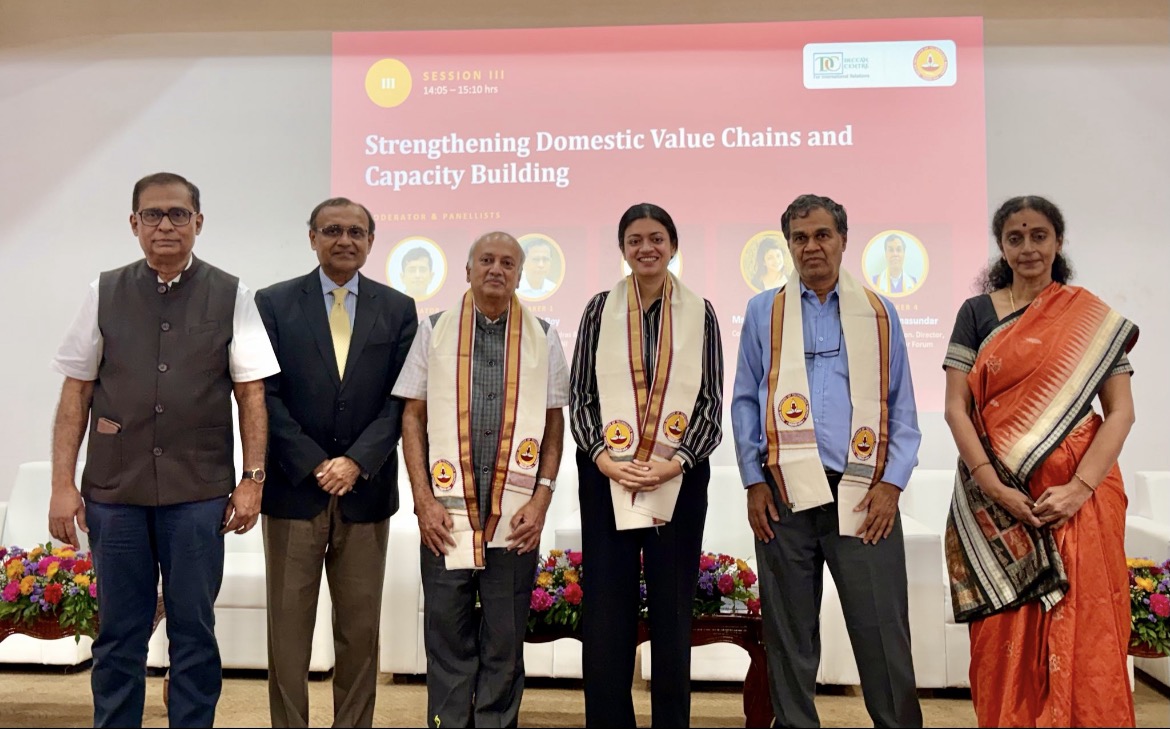
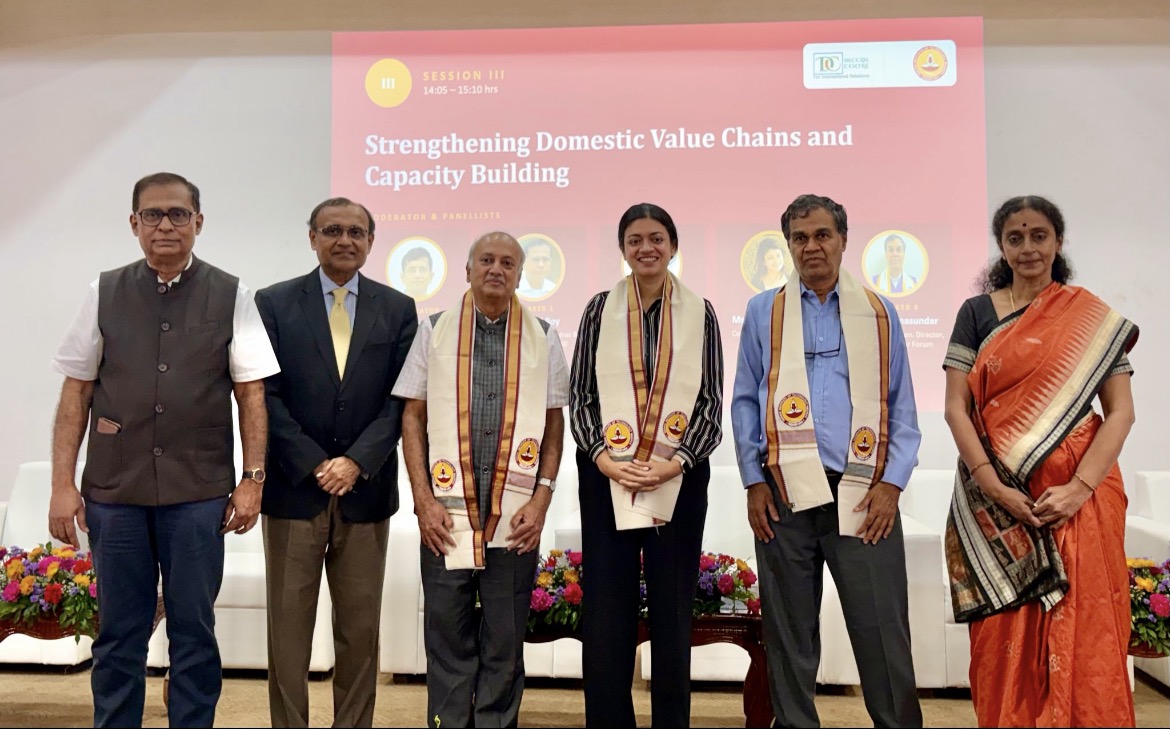
The Deccan Centre for International Relations (DCIR), an independent think tank under the Institute for Financial Management and Research (IFMR), in collaboration with the Indian Institute of Technology Madras (IIT-Madras), organised a One-Day International Conference on “Building India’s Nuclear Ecosystem: Policy, Technology & Industry” on 8th October 2026 (Thursday) at the TT Jagannathan Auditorium, IIT Madras.
The conference was convened at a time of renewed global momentum for nuclear energy, driven by the twin imperatives of energy security and climate action with countries worldwide revisiting nuclear power as a reliable, low-carbon source of baseload electricity. India stands at a particularly important juncture in this global story, with ambitious targets for expanding nuclear capacity, a long-standing three-stage programme, and a growing recognition of the need for faster, more cost-effective deployment.
The Inaugural Session featured a Welcome Address by Ambassador T. S. Tirumurti, Chair, Steering Committee, Deccan Centre for International Relations & Former Ambassador/PR of India to the United Nations, New York, and Prof. (Dr.) Manu Santhanam, Dean for Industrial Consultancy and Sponsored Research (IC&SR), Professor - Civil Engineering, IIT-Madras. The Keynote Address was delivered by Dr. Anil Kakodkar, Member, Atomic Energy Commission, on “India’s Nuclear Vision”, which set the strategic context for the day’s discussions. Closing Remarks were given by Mr. Balasubramanian C, Senior Advisor, Deccan Centre for International Relations.
The technical sessions examined the full spectrum of challenges and opportunities in building India’s nuclear ecosystem. Discussions on SMRs focused on their role, the opportunities they present, and the challenges that must be overcome if they are to become a meaningful part of the energy mix, including how new entrants can accelerate construction, how Indian industry can meet the exacting demands of precision engineering, and how NPCIL is positioning itself in this emerging landscape. Sessions on SMEs addressed the critical question of building precision engineering infrastructure for SMRs and Modular Reactors, manufacturing aspects of advanced reactor designs, and private developers’ perspectives on technology development, industry challenges and risk mitigation. Later sessions focused on strengthening domestic value chains and capacity building, including the need for an institutionalized academia–industry interface and certification models for MSMEs, dedicated quality management systems and regulatory clearances, the techno-commercial realities of upgrading supply chains into value chains, and the broader imperative of creating a genuine Indian nuclear ecosystem. A Special Address was delivered online from Vienna by Mr. Andrea Borio di Tigliole, Programme Coordinator, Department of Nuclear Energy, IAEA. The final session examined the legal and regulatory foundations underpinning the sector, including overarching concepts of regulatory adherence across the nuclear fuel cycle, the implications of the SHANTI Act for liability, rules and private participation, and possible financial architecture to support the sector’s growth.
The Vote of Thanks was proposed by Ms G. S. Simhanjana, Research Officer, Deccan Centre for International Relations.
Dr. Kallol Roy, Adjunct Faculty at IIT Madras and former CMD of BHAVINI, along with the staff of the Office of Global Engagement, IIT Madras, played a significant role in the success of the event. Their valuable support, guidance, and contributions were instrumental in making the event a success.
The event saw active participation from members of the strategic community, industry leaders, academics, policymakers and other thought leaders. It provided a platform for open dialogue among these stakeholders on an interconnected agenda linking academia, policy, technology, industry, regulation and finance. The conference underscored that only when these elements move together can India build a nuclear ecosystem that is safe, competitive, self-reliant and globally respected.
This conference continues the proactive efforts of IIT Madras in this direction and Deccan Centre’s efforts to bring domain expertise to South India and encourage critical thinking among academics, professionals, and strategic enthusiasts on the evolving realities in Science, Technology and Innovation (STI) under the rubric of the policy landscape.
08th October 2026
Chennai
EOM
*****